

Tom
Keep Going, Believe, and Achieve
The following interview is based on Tom’s account of his journey through life after a serious motorcycle accident in 2007. Tom speaks openly about his brain feeling as though it had been “wiped clean”, his struggle with fear, and what it means to give something back to the system through his work after years of receiving care and support.
What do you remember about the day of your accident? What happened?
I only remember it as a kind of haze. I know we were going out on our motorbikes, and I managed to send my mum a text saying: “Hi Mum. I’m going for a ride. See you later.” I was sixteen at the time, almost seventeen. I don’t remember the accident itself, but I know from what I was told that a helicopter came to take me to hospital.
What I do remember very clearly is the moment before the operation. When they brought me into the operating theatre, the doctors were discussing whether they should even “go ahead” with the surgery. One of the younger doctors said: “Yes, let’s operate. He still has his whole life ahead of him.”
How did the injury affect the rest of your life?
Completely. It was as if everything in my head had been wiped clean – I had to learn to read, write, and do maths all over again. It took around five years before I was able to start reading again. Physically, it was difficult too; I had fractured vertebrae and a broken left arm.
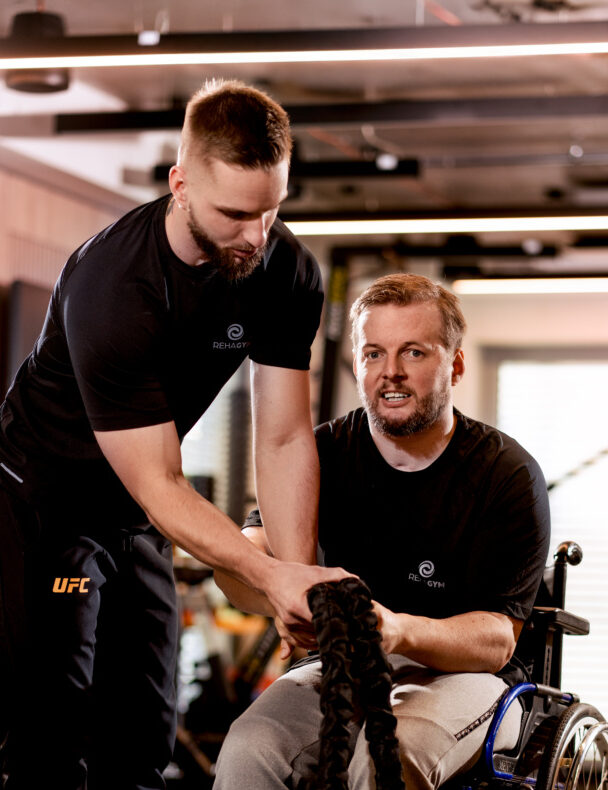
I spent a year in Janské Lázně and went through many other rehabilitation facilities as well. Today, I can take a few steps, but walking independently is still a challenge and something I continue to work on.
You mentioned that fear affects you when you walk. How do you deal with that?
It’s strange, but I can’t focus on walking at all. The moment I start thinking about it, I get scared. I have to look out of the window, for example, or think about something else – and then I walk well. It’s a bit of a vicious circle, because the therapists are worried that something might happen to me, so they don’t want me doing it.
But you’re also working now. How did you get your job?
One of my assistants, Tomáš, helped me. He asked me what I would enjoy doing and said that, after all the care the state had invested in me, I should try to give something back to the system. I had always enjoyed electronics and fixing things.
The next day, he called me and asked if I could make it to Pankrác. I came back from there feeling as though I had a job. I work under a casual work agreement, welcoming customers in a shop, and I’ve been doing it for several years now. My colleagues are always happy to see me, and I enjoy the work.
What does Cerebrum mean to you?
I found out about Cerebrum through Facebook. What I enjoy most are their rehabilitation stays. They give me something different to look forward to during the year, especially when everyday life can sometimes become monotonous. We have a lot of fun there, and it’s a great group of people.
How did you come to terms with what happened to you? What motivates you to keep going?
Sometimes it’s difficult, and I feel as though I’m running out of strength because it has been such a long journey. But the hope that one day I might be able to walk normally again is still there.
I’ve also been really motivated by stories about people who worked hard on themselves and managed to change their lives, like the people I saw on a TV weight-loss programme. I saw people who could walk achieving their goals, and I thought to myself that I wanted to do something like that too.
What advice would you give to people with acquired brain injuries?
My advice is simple: work, work, work. Even though I sometimes get tired of it all, I know there’s no other way. And I also have a motto: “Keep going, believe, and achieve.” Just don’t give up, and keep believing that things can still get better.