

Míša
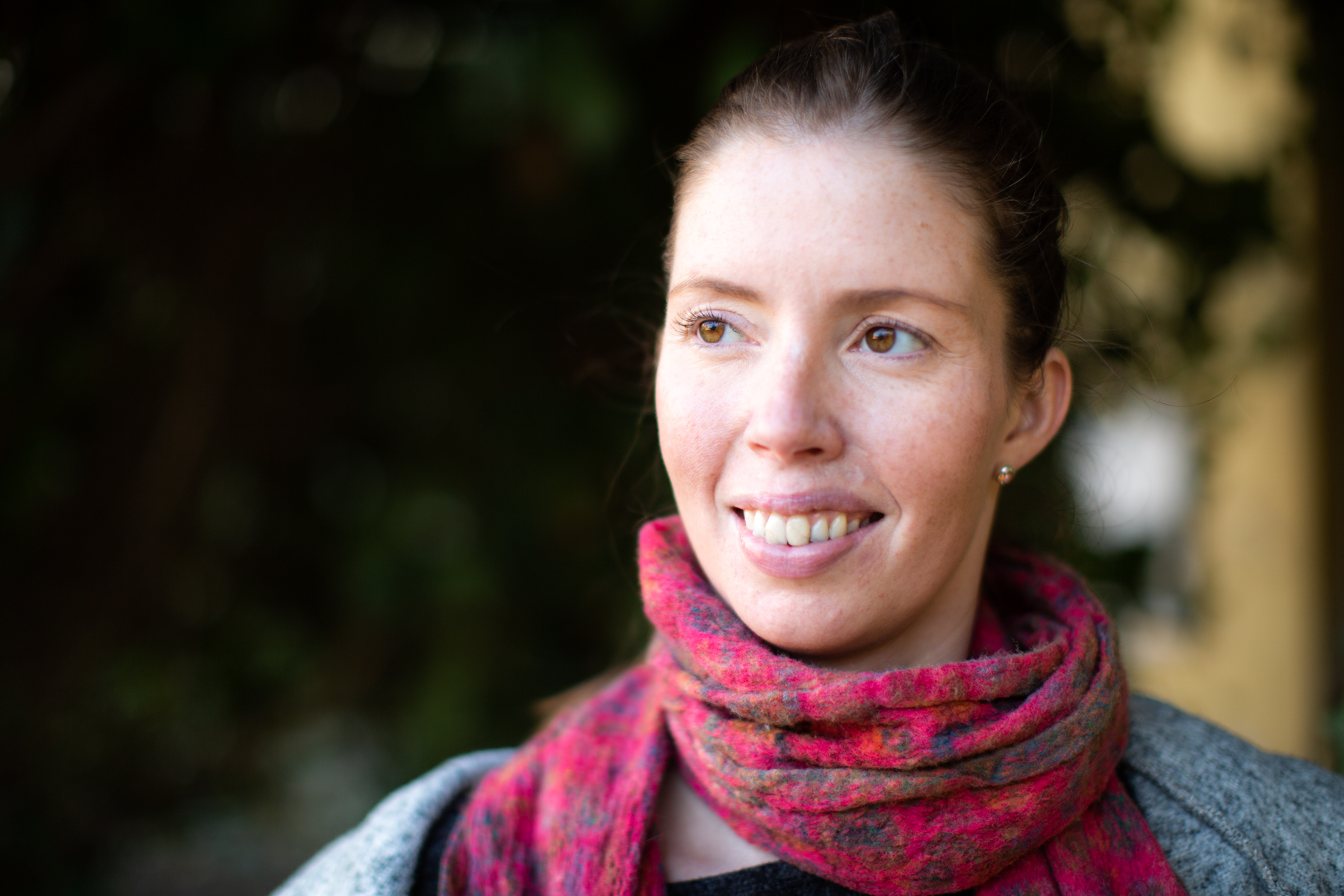
The following interview took place in January 2026. Míša is a woman who is not afraid of challenges and lives life to the fullest.
She started coming to Cerebrum in 2019 for cognitive function training, and later our community centre helped her complete a peer support training course. She currently lives in Prague. When she was 25, she was hit by a tram – through her own fault, as she herself says. At the time, she was finishing university while also working part-time. She was overworked, stressed, and exhausted. The accident left her with a traumatic brain injury, and she spent six weeks in a coma. As a result of the injury, she has hemiparesis, which means reduced mobility on one side of the body – in her case, the right side. Her cognitive functions, particularly her memory, are also impaired.
What do you remember about the day of your accident?
Honestly, I don’t remember about six months before the accident. It’s all a bit of a blur. I don’t even have any negative feelings when I travel by tram. My family had to tell me what had happened when I started waking up from the coma. I had absolutely no idea that I had defended my diplomma thesis or that I had been hit by a tram.
How did the injury affect the rest of your life?
Completely. My life changed in an instant. I went from being a student to receiving a disability pension for several years. I had defended my master’s thesis just two days before the accident, but I never made it to my final state examinations and ultimately wasn’t able to complete my master’s degree because of my impaired cognitive functions, especially my memory.
Today, I’m working again, I play sports, and I live an almost ordinary life. I’ve travelled around India, Germany, Japan, Sri Lanka, and the Greek island of Rhodes. I’m involved in adaptive cycling and sailing for people with disabilities. I do what I enjoy, with people whose company I enjoy.
How does the injury affect you today?
I definitely walk more slowly, I limp, and I’m generally slower than I used to be. I need more peace and quiet and I’ve learned not to be too demanding of myself. I use external aids, especially the calendar on my phone, so that I don’t forget things.
How did you come to terms with what happened to you?
I think I came to terms with it very well. I’ve been very stubborn ever since I was a child, so I threw myself into rehabilitation and refused to be discouraged. I remember telling my occupational therapist in Kladruby that I COULDN’T DO IT, COULDN’T DO IT, COULDN’T DO IT when she was teaching me how to use a wheelchair – and then, suddenly, I COULD. That stubbornness kept pushing me further and further.
How did the people around you react to your accident, and who supported you the most?
The people closest to me, my mother and my sister, were of course very upset, but they supported me right from the beginning. They stayed by my side, visited me in hospital, carried out basal stimulation, and did everything the therapists and nurses advised them to do to help me through the worst of it.
My mother was my greatest support. In Kladruby, for example, she told me: “Your spinal cord isn’t injured. You can walk. The wheelchair is just a means of getting around!” I suppose I inherited my stubbornness from her.
What motivated you on your road to recovery?
Partly my stubbornness, and partly two mottos that gradually became part of who I am: “A positive mind is half the battle” and “Believe, and your faith will heal you.” I simply decided to believe.
What advice would you give to people with acquired brain injuries?
Keep going and don’t give up, even when it’s hard. Believe that tomorrow – as soon as tomorrow – things can be better.
How has your outlook on life changed?
My desire to live life to the fullest knows no bounds. I appreciate people who are supportive and willing to help me much more than I used to.
And what does Cerebrum, our patient organisation, mean to you?
Cerebrum is my connection to the world, a place where I’m accepted with all my imperfections.
At the moment, my favourite activities are bowling and pétanque, and I also enjoy going on rehabilitation stays. We’re a great group and we have a lot of fun together.